
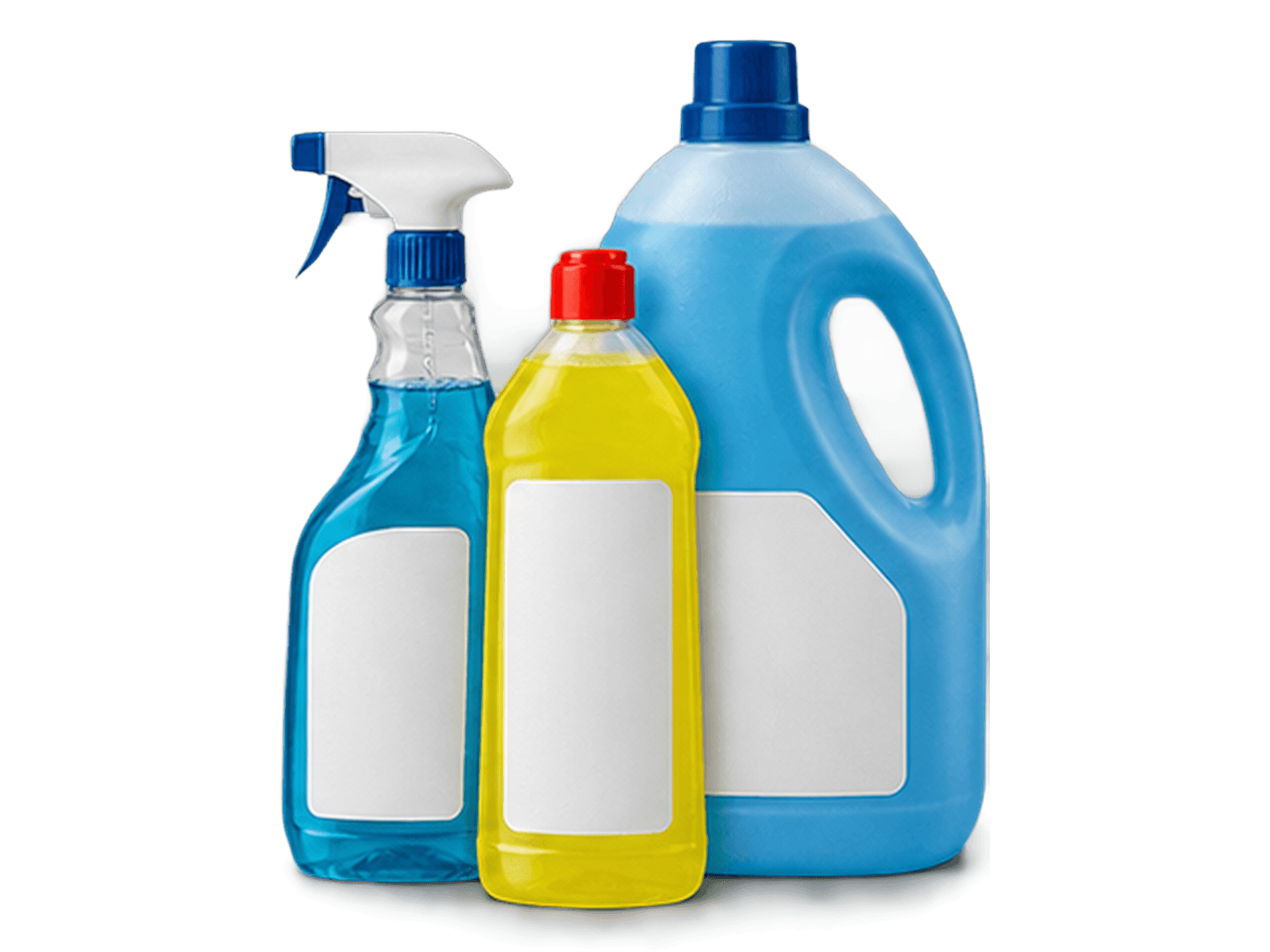
Most cleaning cupboards hold many bottles and little order. Ten products for four jobs, half empty containers and labels nobody can read. Good cleaning starts from the opposite: few products, and everyone knows where and how each one is used.
01Four products for most things
One all purpose cleaner for surfaces, one for floors, one for the toilet and one disinfectant. These cover the daily needs of an office, a café or a school. Specialised products, for kitchen grease, limescale or glass, are added only where there is a real need.
02Concentrate or ready to use?
A concentrate costs less per litre of solution and takes less space. It does demand discipline: a dosing pump or measuring cup, dilution instructions on the wall and labelled bottles. Ready to use is more expensive, but leaves no room for error. For small teams without permanent staff it is often the safer choice.
03One colour for each area
The simplest way to keep germs from travelling from the toilet to the kitchen is colour. Cloths, mops and buckets in four colours, one for each area. The rule is learnt in five minutes and needs no supervision.
| Colour | Area |
|---|---|
| Red | Toilets and urinals |
| Yellow | Sinks, tiles and the rest of the washroom |
| Green | Kitchen and food areas |
| Blue | Offices, furniture and general surfaces |
Order in the cupboard means order in the building. One brings the other.
04Storage
- Closed containers with the original label, away from food.
- Never in soft drink or water bottles.
- Concentrate in the storeroom, diluted product on the trolley.
- Safety data sheets available to everyone.
Want a short list of the few products that suit your space? Tell us what you clean and we will prepare it.
Want to go through this for your space?
Tell us what you clean and how often. We will suggest products and quantities.